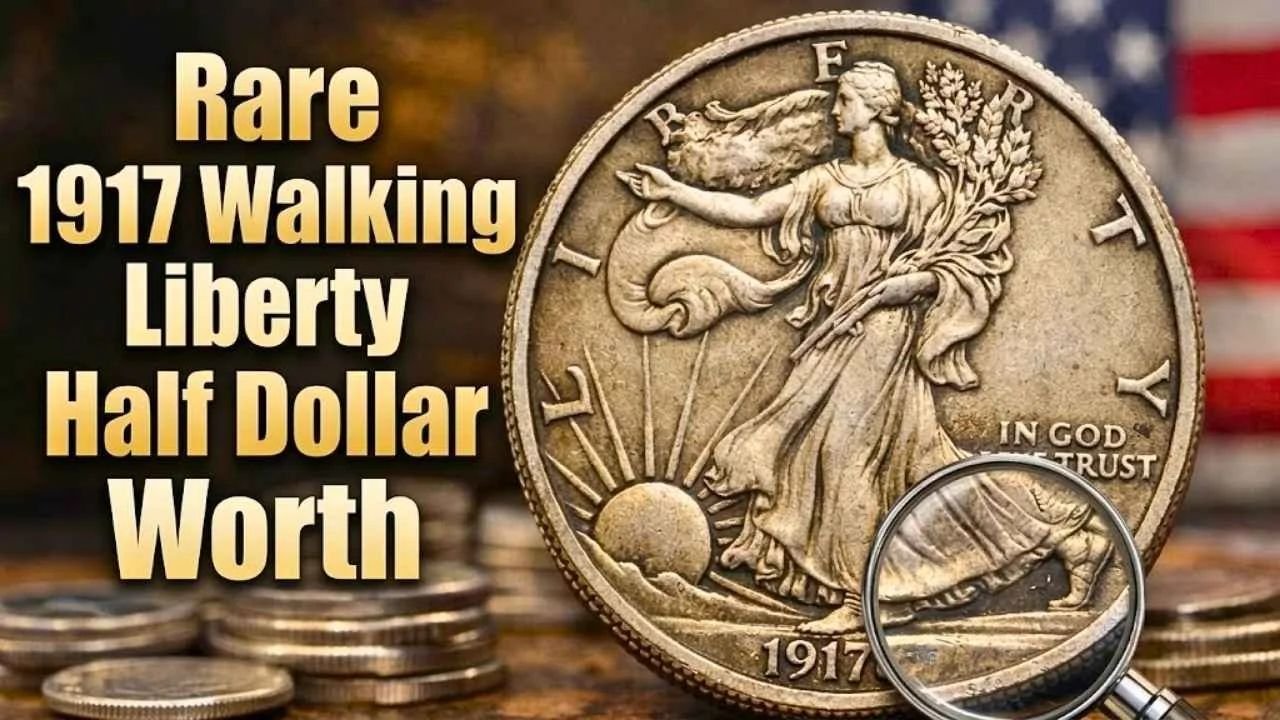
Collectors continue to pay close attention to the 1917 issue of the Walking Liberty Half Dollar, a coin that blends artistic design with an unusual minting history. More than a century after it entered circulation, this half dollar remains one of the most recognizable and admired coins in American numismatics.
Interest has grown again as collectors revisit early-year varieties and search for surviving high-grade examples. While millions were struck, relatively few remain in exceptional condition, making certain 1917 pieces far more valuable than their face value suggests.
The Iconic Design Behind the Coin
The coin was created by renowned sculptor Adolph A. Weinman and debuted in 1916. It replaced the long-running Barber Half Dollar and quickly gained praise for its artistic quality.
On the obverse, Lady Liberty strides confidently toward the rising sun while draped in the American flag, symbolizing hope and progress. The reverse shows a powerful eagle perched on a rock with wings partly spread, a representation of national strength.
This same design proved so enduring that it later inspired the modern American Silver Eagle introduced in 1986.
What Makes the 1917 Issue Different

The 1917 release stands out because of a mid-year design adjustment involving mint marks. Early in production, mint marks were placed on the front (obverse) of the coin. Later that year, the U.S. Mint moved the mint mark to the reverse.
Because of this change, collectors now recognize multiple varieties from the same year.
Mint Locations
Coins were produced at three major facilities:
- Philadelphia Mint – no mint mark
- Denver Mint – “D” mint mark
- San Francisco Mint – “S” mint mark
Both Denver and San Francisco coins exist with two different mint mark positions, creating additional varieties collectors seek.
Why the Obverse Mint Marks Matter
Early strikes from Denver and San Francisco placed the mint mark on the obverse beneath the motto “In God We Trust.” These are noticeably scarcer than the later reverse-mint-mark versions.
Because fewer were produced before the design change, these varieties typically command stronger premiums—especially when preserved in high grades.
Estimated Value Chart
The value of a 1917 Walking Liberty Half Dollar depends largely on condition, mint mark location, and overall eye appeal.
| Coin Variety | Circulated Value | Uncirculated Value | High-Grade Collector Value |
|---|---|---|---|
| 1917 (Philadelphia) | $20 – $45 | $150 – $350 | $800+ |
| 1917-D (Reverse Mint Mark) | $30 – $60 | $250 – $600 | $1,200+ |
| 1917-S (Reverse Mint Mark) | $35 – $70 | $300 – $700 | $1,500+ |
| 1917-D (Obverse Mint Mark) | $80 – $200 | $900 – $2,000 | $4,000+ |
| 1917-S (Obverse Mint Mark) | $90 – $250 | $1,000 – $2,500 | $5,000+ |
Actual prices vary depending on certification, strike quality, and collector demand.
Rarity and Survival in High Grades
Although millions were minted, many 1917 half dollars saw heavy circulation throughout the early 20th century. Coins often passed through decades of everyday use before collectors began saving them in significant numbers.
As a result, pieces with sharp details, strong luster, and minimal wear are relatively scarce today. Certified examples graded by major services often attract strong interest at auctions.
Tips for Collectors
Focus on Condition
Coins with visible detail on Liberty’s gown and the eagle’s feathers generally command higher prices. These areas are among the first to show wear.
Verify Mint Mark Placement
For the 1917 issue, identifying whether the mint mark appears on the obverse or reverse is essential. This detail can dramatically affect value.
Consider Professional Grading
Certification by respected grading services can confirm authenticity, establish condition, and increase buyer confidence if the coin is later sold.
Why the 1917 Walking Liberty Half Dollar Still Matters
Few American coins combine historical significance, artistic design, and collectible variety quite like the 1917 Walking Liberty Half Dollar. Its mid-year mint mark change created a set of varieties that continue to fascinate collectors.
For enthusiasts building a full Walking Liberty collection, the 1917 series remains one of the most intriguing chapters. Whether discovered in an inherited coin box or purchased through a dealer, the right example can represent both a piece of American history and a surprisingly valuable collectible.