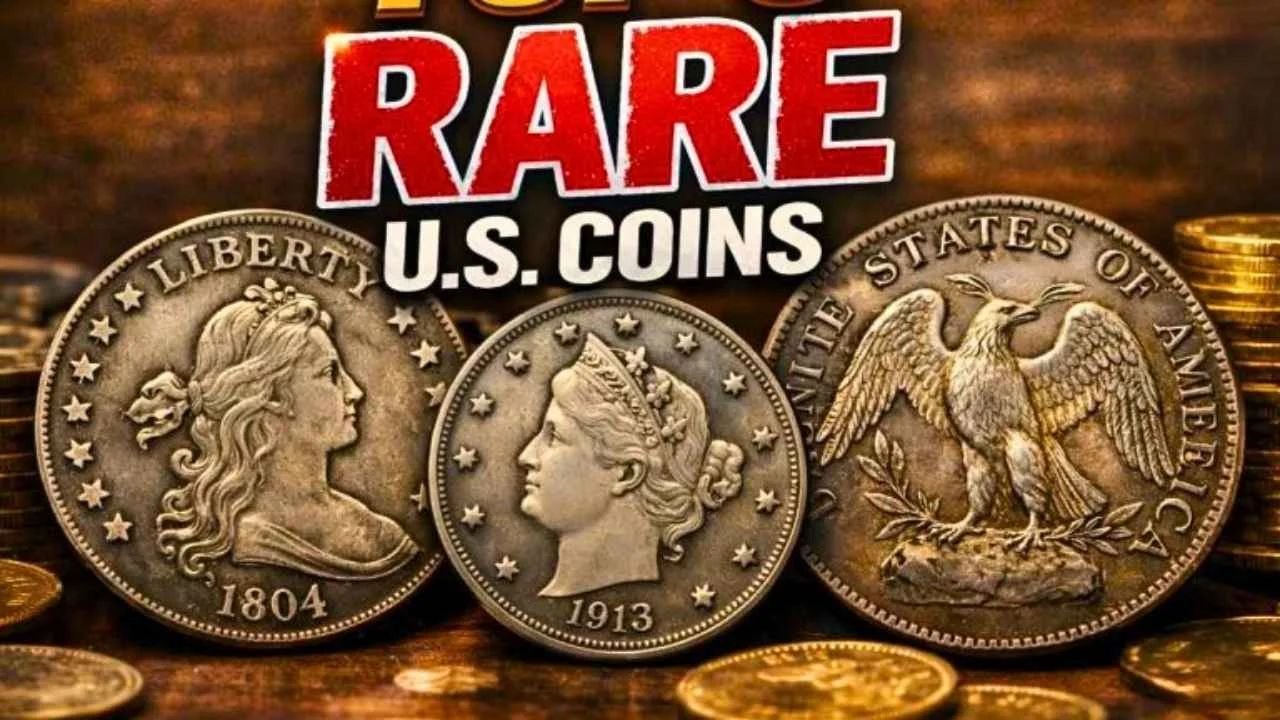
Rare American coins are once again drawing serious attention as high-profile auction results remind collectors how powerful scarcity can be. While most pocket change carries only face value, a select group of historic coins has crossed into eight-figure territory.
These aren’t just old coins. They represent pivotal moments in U.S. monetary history — and today, they rank among the most valuable collectibles in the world.
Here’s a closer look at three iconic pieces that continue to shape the rare-coin market.
1933 Double Eagle
Few coins carry as much intrigue as the 1933 Double Eagle. Struck by the United States Mint during the Great Depression, this $20 gold coin was never officially released into circulation.
Following a shift in federal monetary policy that removed gold from everyday currency, nearly all examples were melted down. A small number survived — some legally contested for decades.

That rarity fueled global demand. One authenticated specimen famously sold for more than $18 million, setting a benchmark for modern coin auctions.
Beyond gold content, it’s the coin’s dramatic backstory and near-total disappearance that drives its staggering value.
1794 Flowing Hair Silver Dollar
Often described as the first silver dollar struck by the young nation, this coin symbolizes America’s earliest efforts to establish a federal currency system.
The obverse features Liberty with flowing hair, while the reverse displays a small eagle. Only a limited number were produced, and far fewer survive in high condition.
In recent years, a top-grade example surpassed $10 million at auction. Collectors consider it a cornerstone of American numismatics due to its age, historic status, and scarcity.
For many, owning one represents holding a tangible artifact from the country’s founding era.
1913 Liberty Head Nickel
Mystery surrounds the 1913 Liberty Head Nickel. Official records indicate the design ended in 1912, replaced by the Buffalo Nickel.
Yet five Liberty Head nickels bearing the 1913 date surfaced years later. Experts believe they were struck unofficially, though the exact circumstances remain unclear.
Only five confirmed examples exist today. Each has traded hands for millions, with individual sales exceeding $4 million.
Its rarity, combined with unanswered questions about its origin, keeps demand exceptionally strong.
Snapshot of These Rare Coins
| Coin | Why It’s Famous | Notable Sale Range* |
|---|---|---|
| 1933 Double Eagle | Withdrawn from circulation, nearly all melted | $18 million+ |
| 1794 Flowing Hair Silver Dollar | First U.S. silver dollar issue | $10 million+ |
| 1913 Liberty Head Nickel | Only five known, mysterious origin | $4 million+ |
*Values depend on condition, provenance, and auction timing.
What Drives Multi-Million-Dollar Prices?
Extreme rarity sits at the center. When only a handful of examples exist — or fewer — competition intensifies.
Condition plays a decisive role as well. Coins preserved in exceptional state can multiply in value compared to worn examples.
Historical context adds another layer. Coins linked to major economic transitions or early national milestones carry deeper significance for collectors.
Finally, provenance matters. Documented ownership history and authentication by respected grading services enhance market confidence.
Final Perspective
Rare U.S. coins occupy a unique space where history, craftsmanship, and scarcity intersect. The 1933 Double Eagle, 1794 Flowing Hair Silver Dollar, and 1913 Liberty Head Nickel stand as clear reminders that currency can evolve into cultural treasure.
Most coins in circulation today will never reach such heights. But for serious collectors, these legendary pieces define the upper tier of the market — and demonstrate how rarity can transform metal into multimillion-dollar history.